Retractable Banner Stand Sizes: Standard Dimensions and Which to Choose
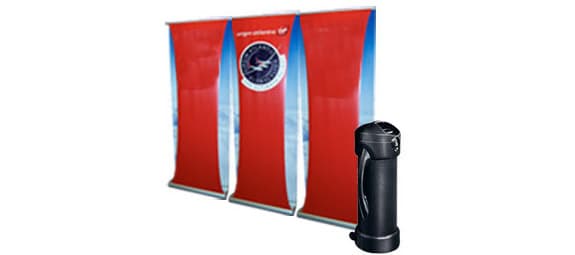
Retractable banner stands are the most popular portable display in North America, and the most common mistake is ordering the wrong size. That is rarely the buyer's fault — the "size" of a banner stand is actually three different numbers: the frame width, the live graphic area, and the height, and the marketing usually blurs them together. Here is the standard dimension chart and a practical way to choose.
The standard retractable banner sizes
Most retractable (roll-up) displays come in the following width and height combinations. Widths are the frame width across the top; height is the full extended height.
- 18 inches wide (1.5 ft) x 60 inches (5 ft) — the smallest, for tight counters and close-up displays.
- 21 inches (1.75 ft) x 69 inches (5.75 ft)
- 24 inches (2 ft) x 78 inches (6.5 ft) — the single most common size, often called "2 x 6."
- 30 inches (2.5 ft) x 78 inches (6.5 ft)
- 33 inches (2.75 ft) x 82 inches (6.8 ft)
- 36 inches (3 ft) x 78 to 90 inches (6.5 to 7.5 ft) — the common "3 x 7" or "3 x 6."
- 40 inches (3.3 ft) x 90 inches (7.5 ft)
- 51 to 59 inches (4 to 5 ft) x 90 inches (7.5 ft) — wide formats for larger statements or multi-message panels.
The workhorses are the 24 x 78 and 36 x 90. If you are unsure, one of those is almost always the right answer.
Width vs. height: which dimension actually matters
Exhibitors usually default to picking a height and assume the width is fixed. It is not — the width is the dimension that decides whether the banner reads.
- Width sets legibility. A taller, skinny banner is elegant but small. A wider banner carries bigger type and reads from farther away. If the job is to pull people from an aisle, prioritize width.
- Height sets presence but has a ceiling. Taller frames (7 to 9 feet) command the room and look more substantial, but beyond about 8 feet the marginal benefit flattens and the graphic gets hard to read from the ground.
- Wide-and-short beats tall-and-thin for signage. If the banner is a sign, a wide format (36 to 51 inches) is usually the better buy than a narrow 18 x 60.
For a typical trade show setup, a pair of 33 or 36 inch wide stands flanking a backwall is the standard configuration — wide enough to read as signage, tall enough to feel intentional.
Live area: the number that actually matters for your graphic
Here is the part that catches people out. The frame width is not the same as the width of your printed graphic. The base of a retractable conceals the bottom of the graphic, and the top and sides are tucked behind the frame, so the live (fully visible) graphic area is smaller than the frame in every direction.
Every product on our banner stands pages lists both the full graphic size and the live area. Design to the live area. In practice:
- Keep critical text and the logo in the upper-middle safe zone — well clear of the bottom few inches the base covers and the thin strips the frame clips.
- Do not put your headline in the bottom third. On a 24 x 78 stand, the base can hide the bottom several inches, and any text there disappears.
- Account for the exact system. A Penta, an S10, and an Xpress-it each clip a slightly different amount. Our artwork file setup guide has the bleed and safe-area rules, and we will confirm the live area for the specific frame you order.
Common systems and the sizes they run
Each hardware line has its own width options, so "a 30 inch retractable" can mean different products. A few representative ranges from the systems we carry:
- Penta — 24, 33, 49, and 59 inches wide, up to 90 inches tall. The wide-format workhorse.
- Orient / Pacific — 31.5, 35.5, and 39.25 inches wide x 90 inches tall (about 83 inches of live height).
- S10 — 33.4, 49, and 59 inches wide, with a heavier-duty base for outdoor and high-traffic use.
- Slice — a flexible range from 24 to 60 inches wide and 69 to 92 inches tall, for non-standard dimensions.
- Xpress-it — 24 to 95 inches wide and 48 to 95 inches tall, when you need a custom footprint or a low profile.
If you are standardizing on a size across a show, picking one system and staying within its width set keeps your artwork and spares consistent. You can browse the full range on our retractable banner stands page.
Indoor vs. outdoor: the same size, different hardware
The size numbers are the same, but the hardware is not. An indoor retractable is built for a climate-controlled hall. An outdoor stand has to survive wind, rain, and UV, which means a stiffer frame, a heavier or ballasted base, and a graphic in a durable, water-based or outdoor laminate.
If your banner will live outside a venue entrance or on a sidewalk, do not just order a bigger indoor unit — order an outdoor-rated one. The banner stands range separates indoor and outdoor systems for exactly this reason.
How to choose the right size
Run the decision through four questions:
- How far away is the viewer? Across an aisle (15+ ft) — go wide (33 to 51 inches). A few feet at a counter — 24 inches is plenty.
- How much do you want to say? One logo and one line — a 24 x 78. A headline, sub-copy, and a call to action — a 36 x 90 or wider.
- Where is it going to stand? Indoor hall, outdoor entrance, a trade-stand corner, or a retail counter. Indoor vs. outdoor changes the hardware; the space changes the height.
- Will you reprint the graphic later? Almost every system accepts a replacement graphic, so buy the frame size now and change the artwork later without a new base. That makes it worth getting the frame size right the first time. See our retractable banner stands for the replacement-graphic options.
The default that is hard to get wrong: a 33 to 36 inch wide stand for a trade show (readable from the aisle), a 24 inch for a counter or tight space, and a wide 49 to 59 inch when you need a big statement or a multi-message panel.
Not sure which size fits your show?
Tell us where the banner will stand, how far away the viewer is, and what it needs to say — those three answers usually pin down the size. Our graphics team will also size the artwork to the exact live area of the frame you pick, so nothing important lands under the base. Get in touch.