Backlit vs. SEG Displays: Which Should You Choose?
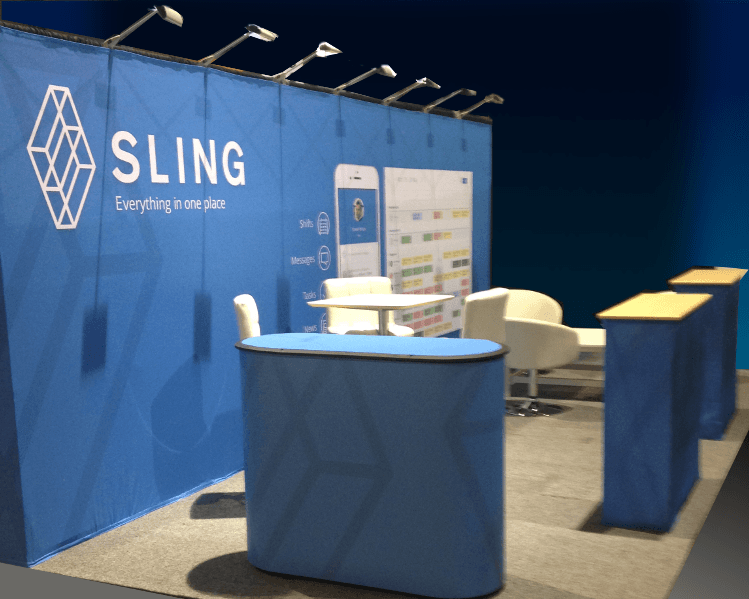
Backlit displays and silicone-edge-graphics (SEG) displays both put a large, seamless graphic on a frame, and both are a step up from a standard printed panel. That is where the obvious similarities end — they are built to do different jobs, and picking the wrong one means paying for a capability you will never use and missing the one you wanted. Here is how to tell them apart and choose.
What each one actually is
A SEG display (also called silicone-edge graphics or framed fabric) uses a printed fabric graphic that has a silicone rubber strip sewn into its edges. That strip grips a channel in a lightweight aluminum frame, so the whole graphic is tensioned flat and held in place by tension alone — no pins, no clips, no visible hardware. The graphic is a one-piece stretched surface.
A backlit display is a SEG or fabric system that adds a light source behind the graphic — LEDs across the face of the frame — so the fabric glows from within. The most common form is a backlit pop-up or a backlit SEG wall, where the light engine is integrated into the frame. See our backlit and SEG displays for the full range.
In short: SEG is about the seamless graphic surface. Backlit is about the seamless surface plus light. You can have SEG without backlight, but a backlit display is, by definition, using a SEG-style graphic.
The headline difference: light
On a show floor, the backlit option is the one that is hard to walk past. Convention halls are evenly and unforgivably lit, and a booth whose graphic glows from within reads as the most interesting object in the room. It pulls the eye from down the aisle in a way a standard graphic, no matter how good the print, cannot match.
That effect is the entire reason to choose backlit. If you need the booth to stand out in a crowded hall, or to be photographed for your website and social (a glowing graphic photographs far better than a laminated panel that reflects the ceiling lights), backlit is the higher-impact choice. It is also the more expensive one — the light engine adds cost and, on some systems, a little weight.
A standard SEG display with no light is the more economical path to the same seamless, matte, glare-free surface. It photographs well and looks clean, but it does not pull traffic the way a lit panel does. Choose SEG when you want the fabric quality and a clean look without paying for the light — and choose backlit when grabbing attention is the actual goal.
Our booth lighting guide covers why light is the highest-return dollar in a booth, and how it compares to simpler clamp-on options.
Graphic quality and finish
Both use a one-piece printed fabric, so the graphics look clean and matte in both cases, which is the main advantage over the seams and reflections of a rigid pop-up. The differences show up in detail and in how the light treats the fabric.
- Under light, the fabric diffuses it. A backlit graphic stays soft and even — the light spreads through the fabric rather than creating hot spots. This is what makes it look like it is glowing instead of being lit from the front.
- Color and contrast. A backlit graphic can be designed for the light — brighter, higher-contrast graphics that pop more under LEDs. A non-lit SEG is viewed under whatever ambient or added lighting you give it.
- Surface durability. Both are fabric, so both fold, crush, and recover when re-tensioned, and both can be washed. Neither has the permanent-crease failure mode of a rigid pop-up panel. This is a big reason to prefer a fabric system you will use for several shows.
Setup, weight, and shipping
SEG displays are light and fast. The frame assembles quickly, the silicone edges slide into the channels, and the whole graphic goes on in one motion — there are no panels to clip into place. That makes SEG one of the easiest large graphics to set up correctly.
Backlit adds a step: the light engine has to be powered, which means wiring the frame to a power source. On a show floor that is usually a power drop from the venue or a battery pack for a stand-alone unit. Either way, budget for the power, and at major venues confirm where the drop is, because it is rarely where you want it — and power is one of the line items that gets expensive if you order it late. Our Chicago drayage and labor guide covers the venue-side costs.
On shipping weight, a backlit unit is heavier than a standard SEG of the same size because of the light engine and wiring. That weight is real money in drayage at major venues, so factor it in if you are moving the display by freight.
Sizes and formats
Both systems cover the standard backwall footprints — 8, 10, and 20 feet, in straight, curved, and, for larger walls, gullwing or serpentine configurations. SEG is the most flexible of the large-graphic options because the same tensioned-fabric approach scales from a single 8-foot wall to a full 20x20 or a multi-panel structure.
Backlit is most common as a backlit pop-up (a collapsible frame with an integrated LED engine) or as a backlit SEG wall. If you want a backlit graphic in a specific curved or 20-foot format, confirm the light engine is available in that configuration — the light adds engineering, and not every frame shape carries it. Our backlit and SEG displays page lists the available formats, and the pop-up range covers the standard non-backlit frames.
When to choose SEG
- You want a seamless, matte, glare-free graphic surface without paying for light.
- The booth will be under good venue or added lighting, or you will add simple clamp-on lights on top of it.
- You are shipping by freight and want to minimize weight and drayage.
- You will reuse the frame for several shows and want a durable, washable, crease-resistant graphic.
- Compare it side by side with a rigid option in our tension fabric vs. pop-up guide.
When to choose backlit
- Standing out in a crowded hall is the primary goal of the booth.
- The booth will be photographed for marketing, and you want a graphic that glows on camera.
- You want a hero logo, hero image, or a single bold message to be impossible to miss from across the aisle.
- Budget and show frequency make the added cost and weight worth the attention it buys.
- See the full range of options in our backlit and SEG displays line.
The honest summary
SEG is the cleaner, lighter, more economical one-piece fabric graphic. Backlit is SEG plus the single most attention-grabbing upgrade available on a show floor. If your booth has to win a walk-in aisle, choose backlit. If you want a premium, glare-free fabric surface and are getting your light from somewhere else — or shipping weight is the binding constraint — choose SEG. Either way you are moving off rigid panels and onto a fabric surface that packs lighter, survives travel, and photographs far better.
Tell us your booth size, whether the graphic will be lit, and how you will move it between shows — those three answers usually decide it. Our graphics team will spec the exact fabric, frame, and (if lit) power configuration to match. Get in touch.